
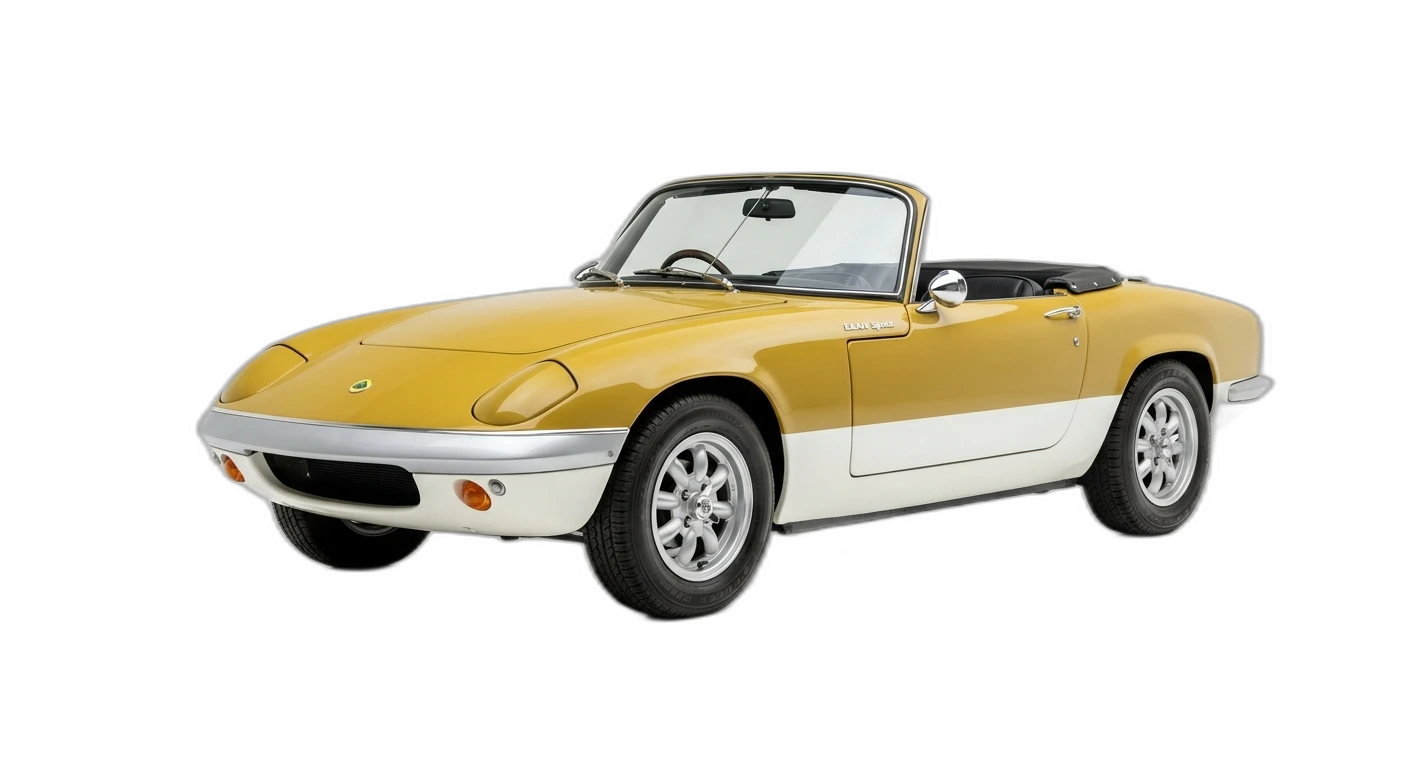
The Lotus Elan Sprint was the ultimate development of Colin Chapman's revolutionary Elan, combining the pioneering backbone chassis and fibreglass body with the most powerful version of the twin-cam engine. It set handling standards that manufacturers would spend decades trying to match.
History
The Lotus Elan was introduced in 1962 as Colin Chapman's vision of the perfect lightweight sports car, and the Sprint version, launched in 1971, represented the final and finest evolution of this iconic design. The Sprint was distinguished by its two-tone paintwork (with a contrasting roof colour) and a big-valve version of the Lotus twin-cam engine that transformed an already excellent car into something truly special. The name Sprint was chosen to reflect the car's ability to accelerate with startling urgency.
The Elan's backbone chassis, designed by Ron Hickman, was one of the most innovative structures in automotive history. A central steel backbone carried all mechanical components, while a lightweight fibreglass body provided the external structure. This combination resulted in a car weighing just 686 kg in Sprint form, with a remarkably rigid platform for precise handling. The Sprint's 126 horsepower big-valve engine, developed by Tony Rudd, provided a power-to-weight ratio that shamed many larger and more expensive sports cars. The car featured independent suspension all round, rack-and-pinion steering, and four-wheel disc brakes.
The Elan Sprint's handling set standards that would influence sports car design for generations. Chapman's obsessive focus on minimizing unsprung weight, combined with the car's low centre of gravity and excellent weight distribution, created a driving experience that contemporary testers described as the finest available at any price. The car was used as the dynamic benchmark by Mazda when developing the MX-5 twenty years later, the Japanese engineers considering it the ultimate expression of lightweight sports car handling.
The Elan Sprint is one of the most desirable and collectible Lotus models, commanding significant premiums over earlier Elan variants. Its combination of the big-valve engine, refined specification, and Sprint designation makes it the definitive version of perhaps the most important Lotus road car. Values have appreciated strongly, and well-documented examples with matching numbers attract intense competition at auction. The car is also hugely popular in historic motorsport, where its agility and pace continue to embarrass much larger and more powerful machinery.
Timeline
Production & Heritage
Value estimates are editorial assessments based on recent auction results and market trends.
Technical Specifications
Engine Details
Performance
Dimensions
Chassis & Suspension
Capacity
Source: Lotus / Wikipedia
Tags
Designed by Ron Hickman
From the 1960s
Featured in Collections
References & Sources


More in Sports
See all
356 Pre-A
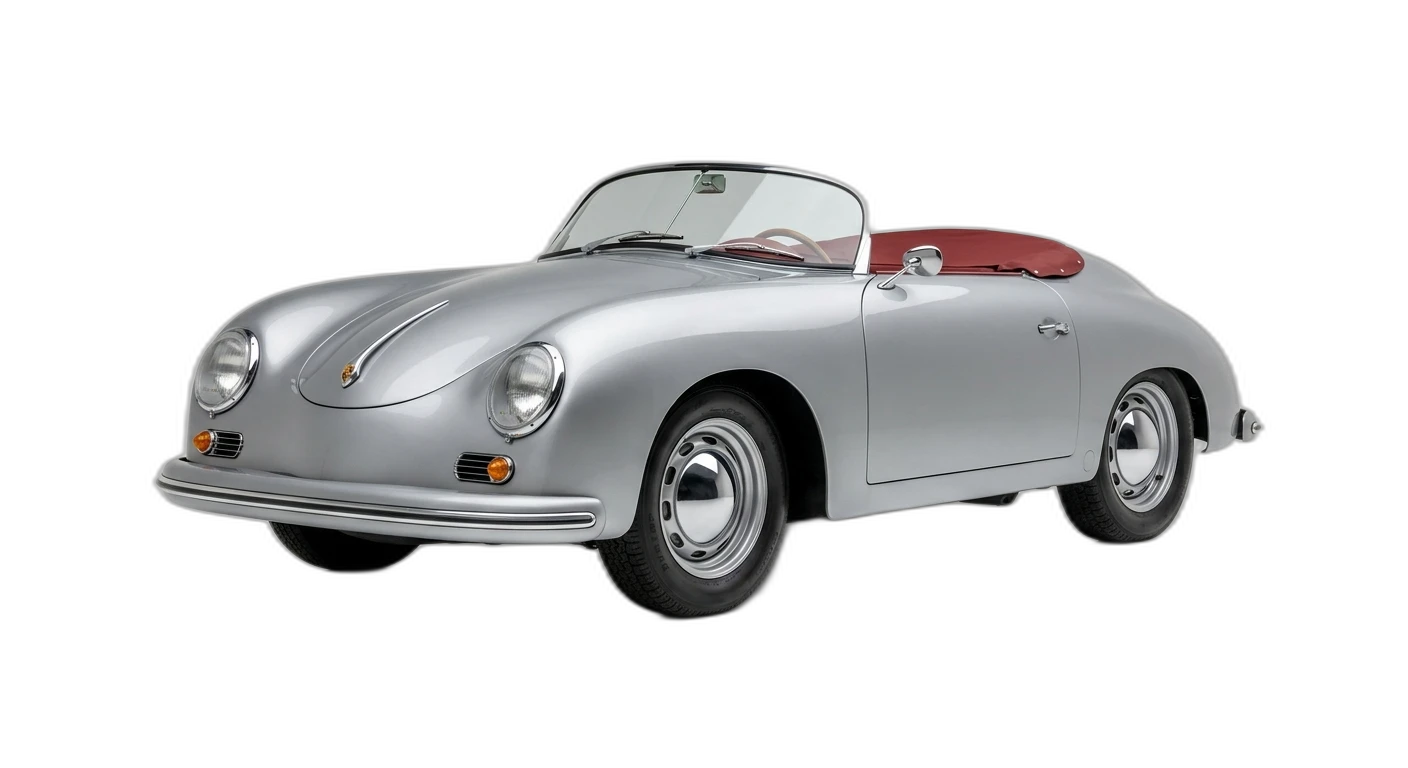
356 Speedster
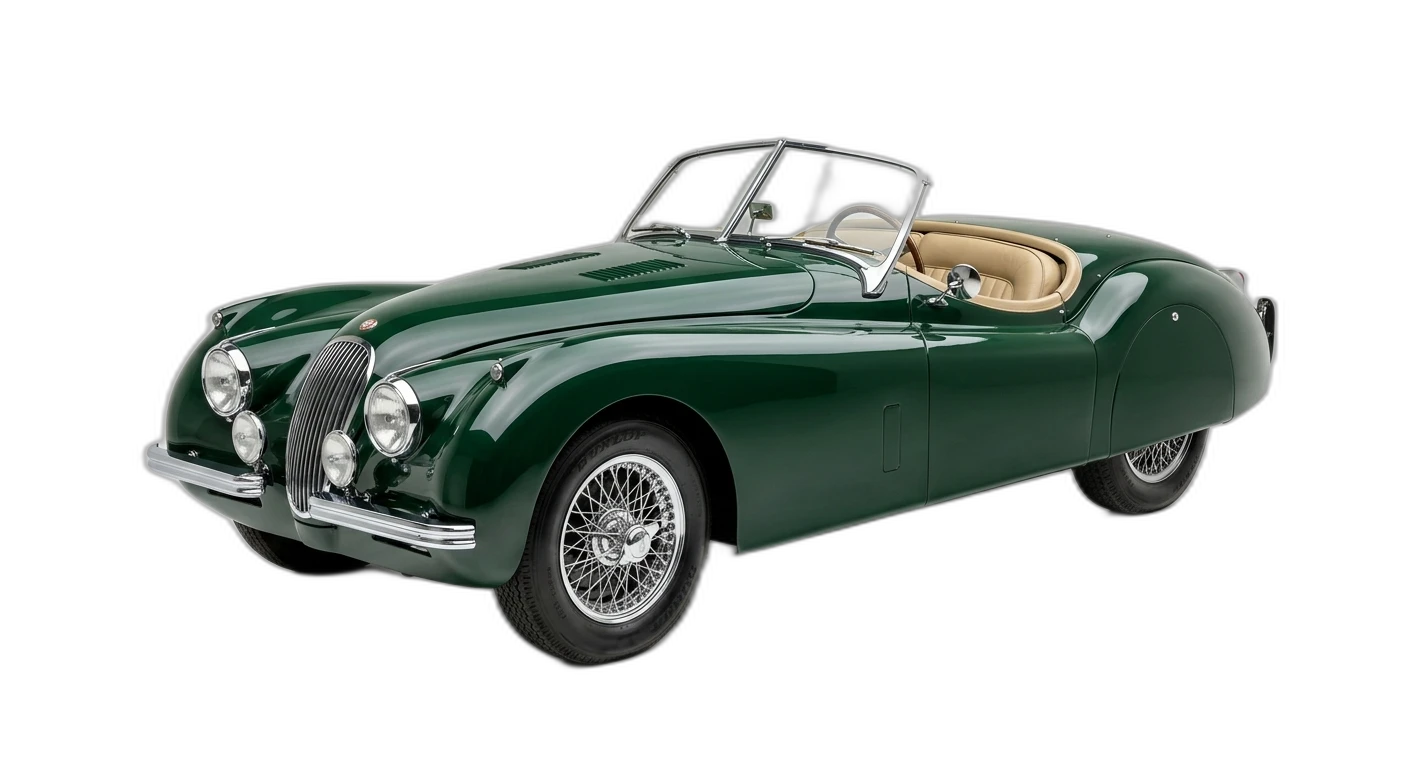
XK120