
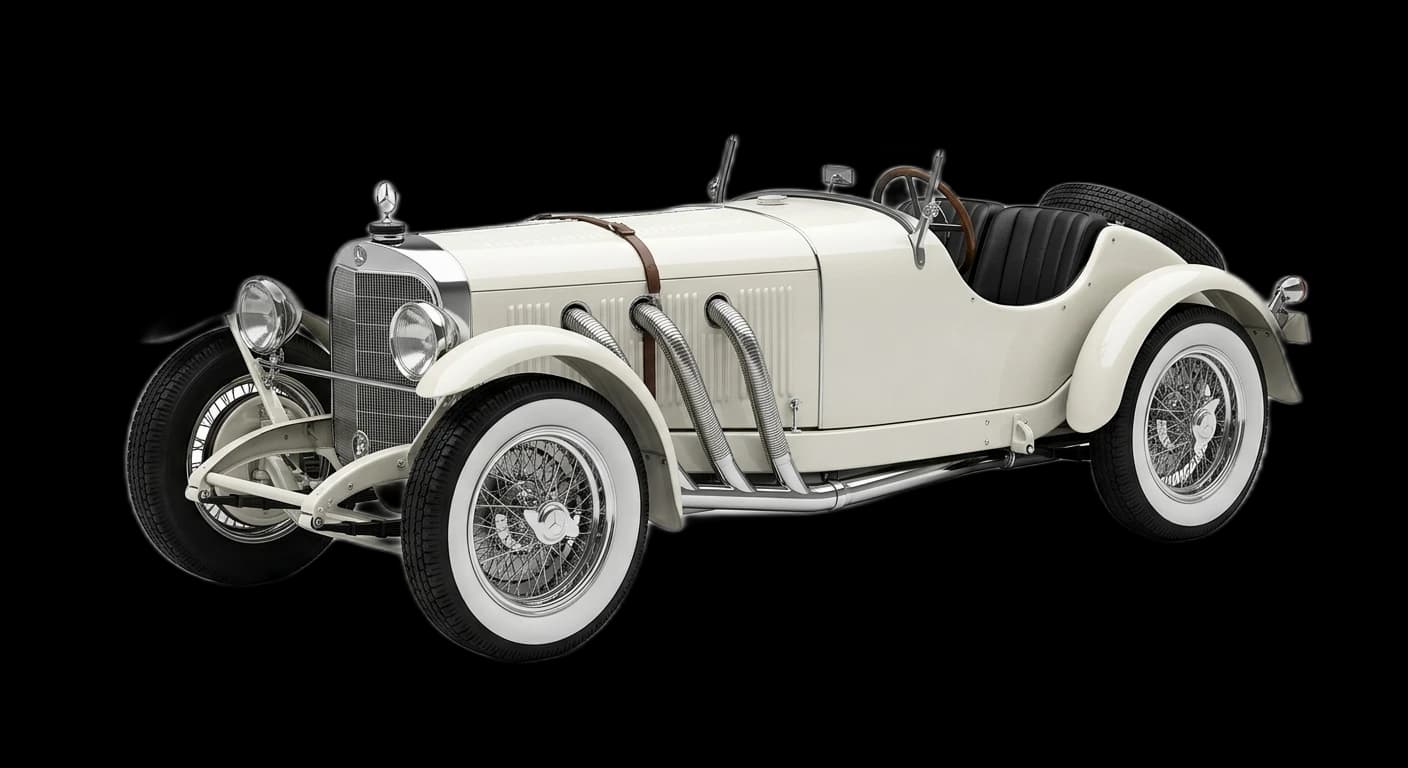
The Lancia Montecarlo Turbo was a Group 5 silhouette racer that won three consecutive World Championship for Makes titles from 1979 to 1981, dominating international sportscar racing with a turbocharged engine derived from a humble Fiat unit. It proved that Lancia could beat Porsche at its own game.
History
The Lancia Montecarlo Turbo (also known as the Beta Montecarlo Turbo) was developed by Abarth as Lancia's contender for the Group 5 Silhouette category of the World Championship for Makes. While nominally based on the road-going Beta Montecarlo, the racing car bore only a passing resemblance to the production vehicle, using the Beta's roof section and windscreen profile as the basis for a dramatic, wide-bodied racing machine with massive aerodynamic devices.
The car was powered by a 1,425 cc supercharged (turbocharged) four-cylinder engine derived from the Fiat 131 Abarth Rally unit, chosen because Group 5 regulations applied a 1.4x equivalence factor to turbocharged engines, placing the Lancia in the under-2.0-litre class while its performance rivalled much larger-engined cars. In race trim, the turbocharged engine produced between 400 and 470 horsepower, an extraordinary specific output from just 1.4 litres. The car used a tubular steel spaceframe chassis, with the mid-mounted engine driving through a five-speed Colotti gearbox.
The results were spectacular. The Montecarlo Turbo, driven by factory drivers including Riccardo Patrese, Walter Rohrl, Michele Alboreto, and Eddie Cheever, won the World Championship for Makes in 1979, 1980, and 1981. The car was particularly effective at Le Mans, where its small engine consumed less fuel than Porsche's flat-six racers, requiring fewer pit stops. Class victories and overall podium finishes at Le Mans cemented the car's reputation as a giant-killer.
The Montecarlo Turbo is one of the most successful and innovative racing cars of its era. With only approximately five chassis built, surviving examples are exceptionally rare and command prices reflecting their championship-winning heritage. The car represents a golden age of Lancia motorsport and the genius of the Abarth engineering team, who extracted championship-winning performance from a turbocharged engine smaller than those found in many family cars. The model is a prized exhibit at motor museums and a star attraction at historic racing events.
Timeline
Production & Heritage
Value estimates are editorial assessments based on recent auction results and market trends.
Technical Specifications
Engine Details
Performance
Tags
Designed by Gianni Tonti
From the 1970s
Featured in Collections
More in Racing
See all

SSK


550 Spyder
D-Type
