Henrik Fisker's BMW Z8: When Nostalgia Met Engineering
The Z8 was a love letter to the 507 — but beneath its retro skin lay the most advanced BMW roadster ever built.
Henrik Fisker was a young designer
Henrik Fisker was a young designer at BMW's Designworks studio in California when he sketched a concept that would become the most expensive BMW roadster ever made. The brief was unusual: design a car that looked backward while engineering it to look forward.
The target was the BMW 507 — Albrecht von Goertz's 1956 masterpiece. The 507 was so beautiful and so expensive that it nearly bankrupt BMW. Only 252 were built, and each one lost money. But the 507 defined a certain idea of automotive beauty: long hood, short deck, minimal ornamentation, and proportions so perfect they needed no explanation.
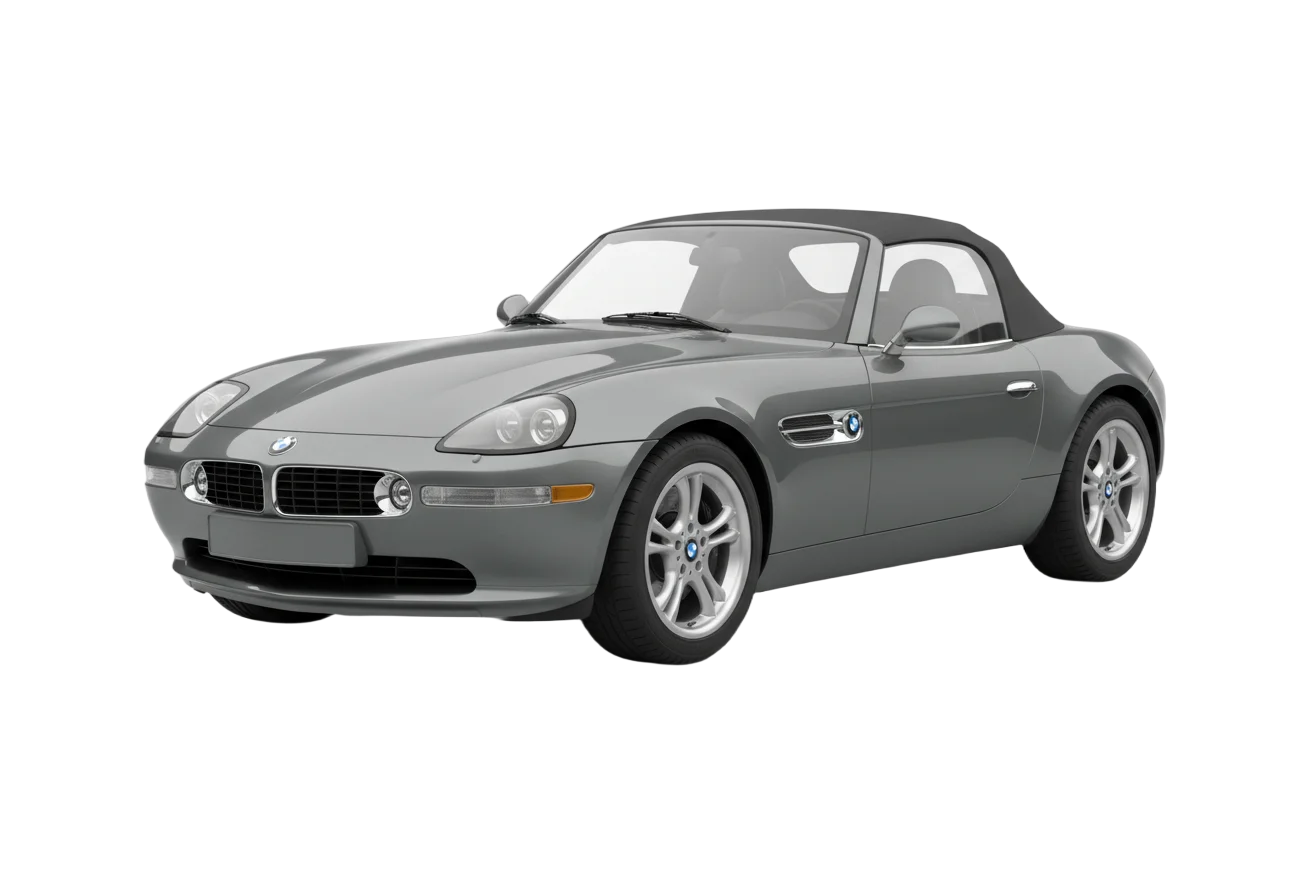
Fisker's interpretation was reverent but not imitative. The Z8's kidney grilles echoed the 507's without copying them. The side vents referenced the original's cooling slots. The overall silhouette — that perfect two-seat roadster proportion — was unmistakably descended from Goertz's work. But the details were contemporary: Xenon headlights, LED taillights, and surface quality that was pure 21st century.
What separated the Z8 from other
What separated the Z8 from other retro-modern cars was what lay beneath the skin. The chassis was a hand-assembled aluminum space frame — the most advanced structure BMW had ever built for a road car. Each one took over a week to assemble at a dedicated facility within BMW's Dingolfing plant. The body panels were stamped and welded aluminum, not steel.
The S62 V8 engine — shared with the E39 M5 — sat behind the front axle, giving the Z8 a near-perfect 50.8/49.2 weight distribution. 394 hp from 4.9 liters, delivered through a Getrag six-speed manual gearbox with ratios chosen specifically for the Z8's character. No automatic was ever offered. BMW understood that the people who would buy this car wanted to shift their own gears.
The Z8 was also the first BMW with an "Engine Start" button — a feature that would eventually spread to every car in the lineup. At the time, it felt ceremonial: press the button, hear the V8 rumble to life, and understand that you were about to drive something special.
Only 5,703 Z8s were built between
Only 5,703 Z8s were built between 2000 and 2003. A brief appearance in The World Is Not Enough — where it was famously cut in half by a helicopter-mounted saw — gave the car cultural visibility, but the Z8 needed no fictional endorsement.
Today, Z8 values have appreciated dramatically. Clean examples regularly exceed $300,000, with low-mileage cars approaching $400,000. The market recognizes what BMW created: a modern classic that respected the past without being imprisoned by it.
Henrik Fisker went on to found Fisker Automotive and later Fisker Inc., but the Z8 remains his defining work — the car that proved a designer could honor heritage and push engineering forward in the same breath.
Written by Singular Heritage Team
Published January 5, 2026 · 7 min read
Part of the Singular Heritage network