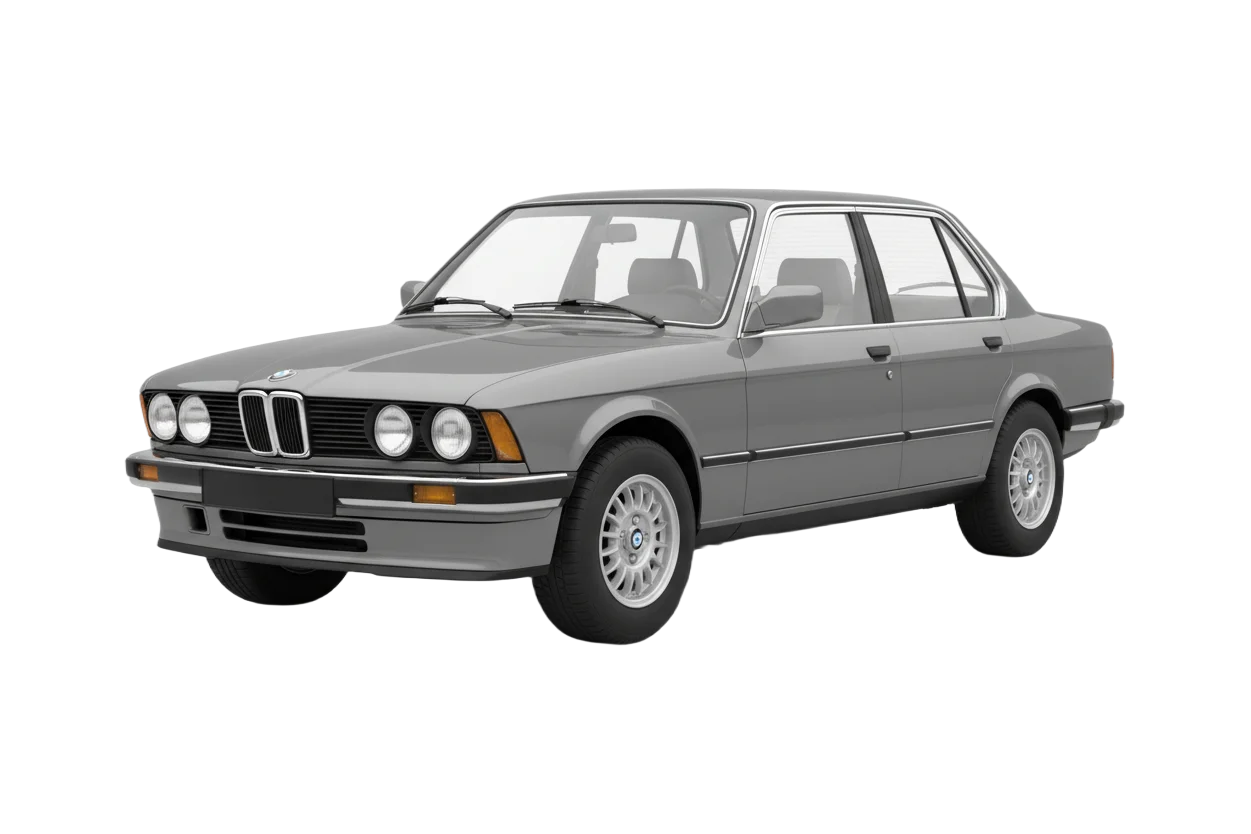
The BMW E21 was the first car to bear the 3 Series name, establishing what would become the most important model line in BMW's history. It successfully replaced the legendary 02 Series while modernizing the compact sporting sedan concept for a new era.
History
The BMW E21, introduced in 1975, had the unenviable task of replacing the iconic 02 Series — the car that had saved BMW from financial ruin and established the brand's sporting identity. Designed by Paul Bracq, the E21 featured a more angular, modern aesthetic that reflected the design trends of the mid-1970s while retaining the compact proportions and rear-wheel-drive layout that made its predecessor so beloved.
The E21 was initially offered with four-cylinder engines ranging from 1.6 to 2.0 liters, but BMW progressively expanded the range to include six-cylinder variants, most notably the 323i with its 2.3-liter M20 engine producing 143 horsepower. This model proved that the compact 3 Series platform could accommodate BMW's silky smooth inline-six engines, establishing a tradition that would continue for decades and become a defining characteristic of the brand.
Despite being available only as a two-door sedan throughout its production life, the E21 sold in extraordinary numbers, with over 1.36 million units produced during its eight-year run. This commercial success validated BMW's strategy of offering a premium compact car and demonstrated that there was a substantial market for vehicles that combined practicality with driving pleasure. The E21 was also available as a Baur TC (Targa Cabriolet), featuring a removable roof panel that offered open-air motoring.
The E21 laid the groundwork for the 3 Series to become the world's best-selling premium car, a title it would hold for decades. While it is sometimes overlooked in favor of its more celebrated successor, the E30, the E21 was a crucial model that ensured BMW's continued growth and profitability during a challenging period marked by oil crises and shifting consumer preferences. Today, clean examples are increasingly appreciated by collectors who recognize the E21's importance in BMW history.
Timeline
Production & Heritage
Value estimates are editorial assessments based on recent auction results and market trends.
Technical Specifications
Engine Details
Performance
Dimensions
Chassis & Suspension
Drivetrain
Capacity
Source: BMW AG / Wikipedia
Tags
Designed by Paul Bracq
From the 1970s
Featured in
Featured in Collections
References & Sources


More in Sedan
See all
Traction Avant
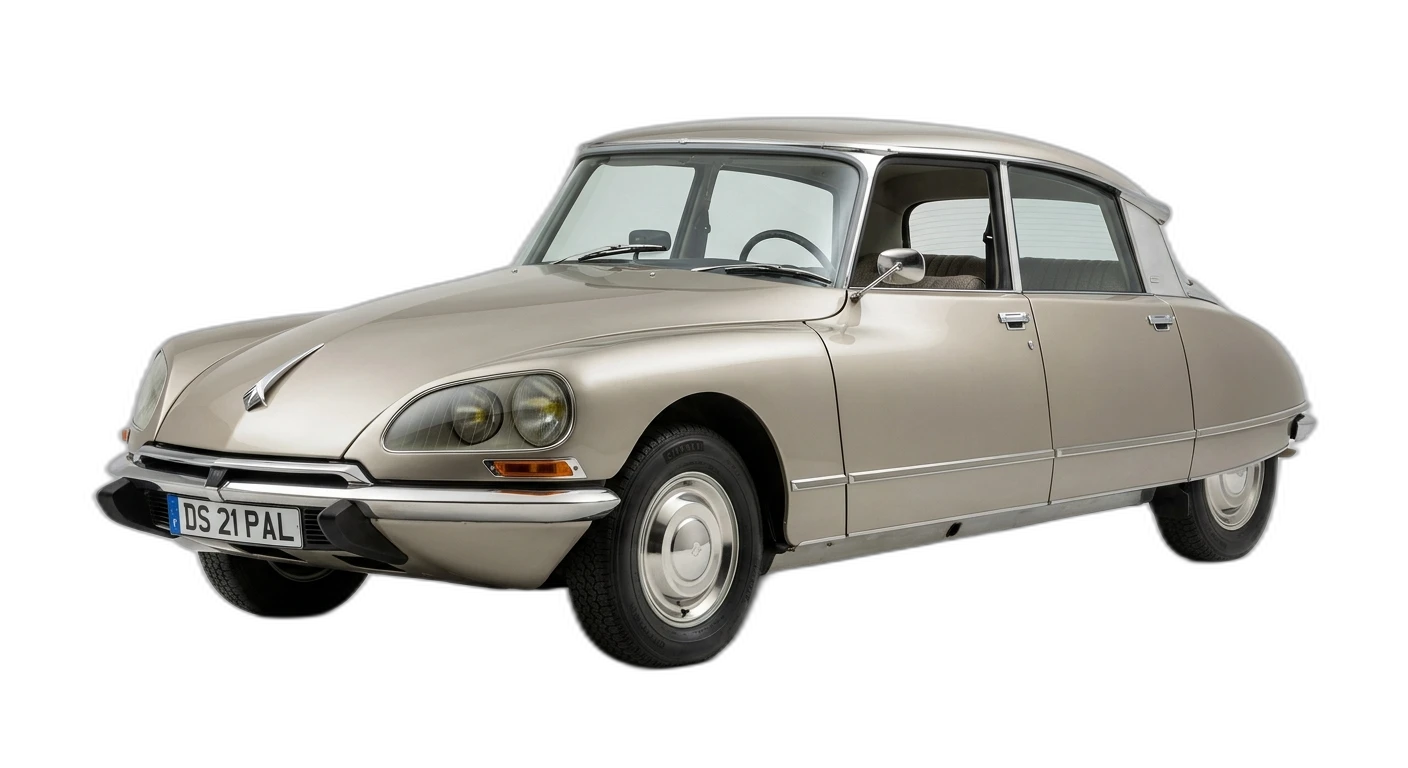
DS 21 Pallas