
Golf GTI (Mk1)
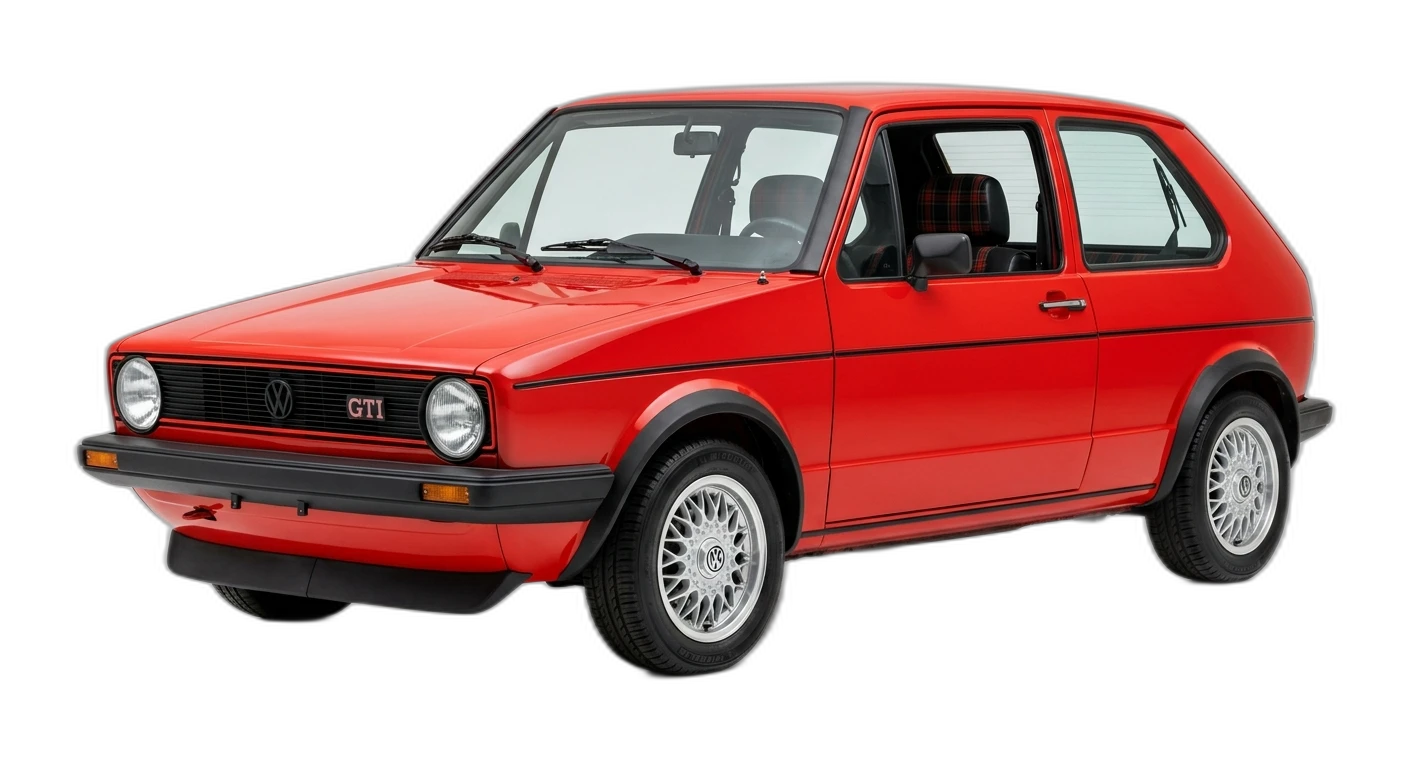
The Volkswagen Golf GTI Mk1 created the hot hatchback category and became one of the most influential cars in automotive history. Its formula of a fuel-injected engine in a practical hatchback body proved that performance and practicality were not mutually exclusive, spawning an entire genre that endures to this day.
History
The Golf GTI Mk1 was born as an unofficial project, developed by a small group of Volkswagen engineers and executives who believed a sporting version of the Golf could succeed despite management skepticism. The project was championed by engineers Hermann Hablitzel, Alfons Lowenberg, and others who worked on the car in their own time before it was officially sanctioned. The result, launched in 1976, featured a Bosch K-Jetronic fuel-injected 1.6-liter engine producing 110 horsepower in a body designed by Giorgetto Giugiaro that was both functional and beautiful.
The GTI's technical specification was deceptively simple but perfectly executed. The fuel-injected engine, in an era when carburetors were still the norm, provided smooth, responsive power delivery and easy cold starting. The front-wheel-drive layout maximized interior space while providing predictable handling that was accessible to non-expert drivers. The suspension was firmed up with stiffer springs and anti-roll bars, lower ride height, and wider tires. Visual distinctions were subtle but effective: a red pinstripe around the grille, tartan seat fabric, a golf ball gearknob, and a black bodykit that gave the car a purposeful stance without being ostentatious.
Volkswagen originally planned to build just 5,000 GTIs, but demand far exceeded expectations. Production escalated rapidly, and by the end of the Mk1's life in 1983, over 460,000 GTIs had been sold. The car was a critical and commercial phenomenon, winning comparison tests and building a fanatical following among enthusiasts. The GTI's success inspired every major manufacturer to create their own hot hatchback, from the Peugeot 205 GTI to the Ford Escort XR3i, creating a market segment that transformed European motoring culture.
The Golf GTI Mk1 is now one of the most collectible modern classics, with values that have risen dramatically over the past decade. The most desirable versions are the earliest 1.6-liter cars and the later 1.8-liter Campaign Edition models. Rust is the primary enemy, and finding a genuine, unmodified survivor is increasingly difficult as many cars were enthusiastically driven, modified, or simply worn out. The Mk1 GTI's importance cannot be overstated: it created a category, defined a brand, and influenced automotive design and engineering for half a century.
Timeline
Production & Heritage
Value estimates are editorial assessments based on recent auction results and market trends.
Technical Specifications
Engine Details
Performance
Tags
Designed by Giorgetto Giugiaro
From the 1970s
Featured in
Featured in Collections
References & Sources


More in Sports
See all
356 Pre-A
356 Speedster
XK120