The E30 M3: How BMW Built the Perfect Homologation Special
The E30 3 Series wasn't just a sport sedan — its M3 variant was a race car with license plates, built in minimum numbers to dominate touring car racing worldwide.
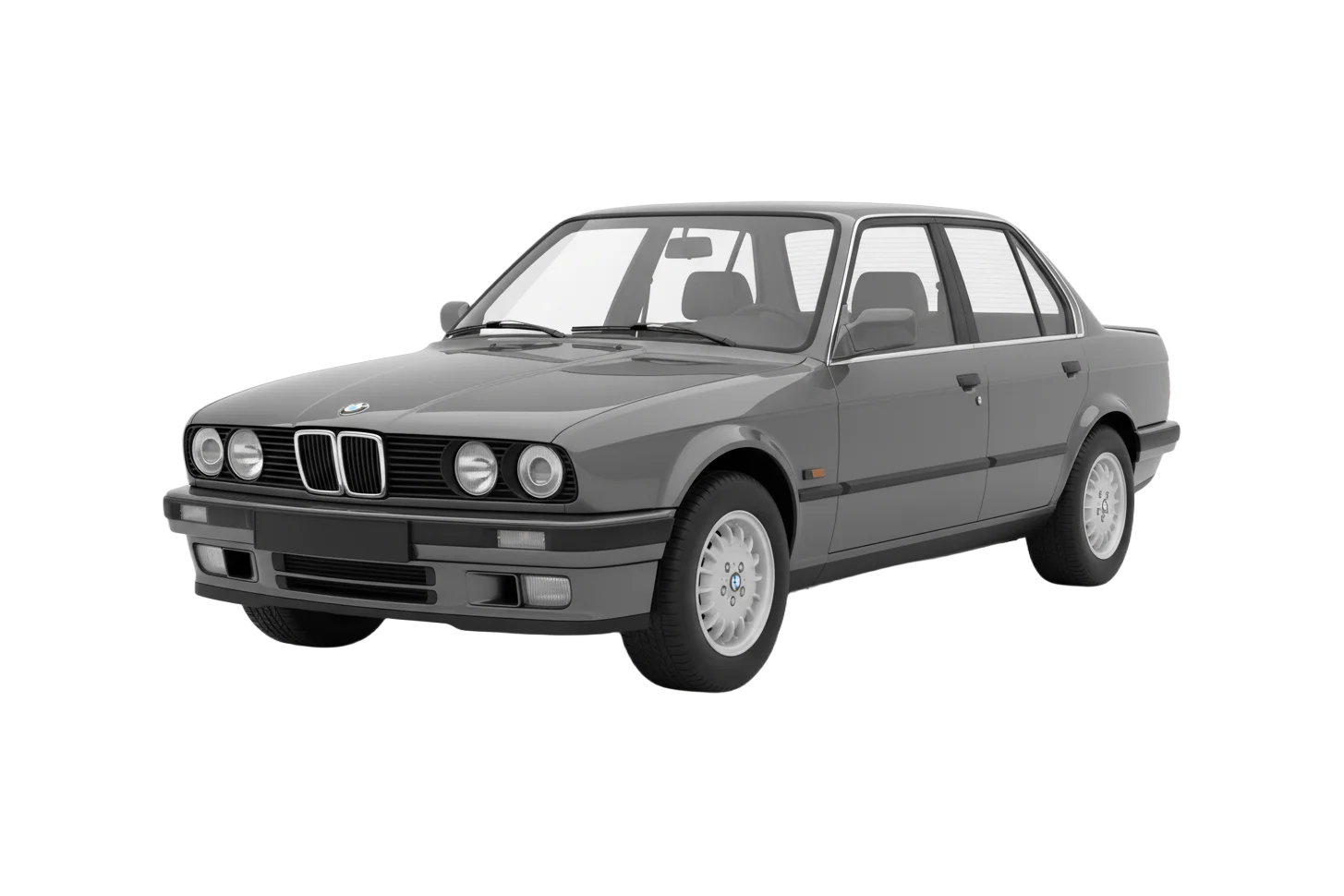
When BMW Motorsport needed a car
When BMW Motorsport needed a car to compete in Group A touring car racing, they turned to the E30 3 Series. What they created was more than a race car — it was the car that defined BMW's performance identity for a generation.
The challenge was homologation. FIA Group A rules required 5,000 road cars to be built before a racing version could compete. BMW's solution was to engineer the race car first, then figure out how to make it road-legal.
Paul Rosche — the engineer behind BMW's Formula 1 turbo engine — designed the S14. It was derived from the M88 that powered the M1 supercar, but reduced to four cylinders with 16 valves and a high-compression head. In road trim, the S14 produced 200 hp at 6,750 rpm. In full racing specification, it exceeded 300 hp and revved beyond 8,500 rpm.
The bodywork told the story of
The bodywork told the story of its purpose. Every modification served aerodynamics: the wider fenders accommodated wider tracks, the deeper front splitter increased downforce, the trunk spoiler with its adjustable gurney flap balanced the car at 160 mph. None of it was decorative. Every surface was developed in BMW's Aschheim wind tunnel.
The suspension was equally purposeful. MacPherson struts at the front with revised geometry, a trailing-arm rear axle with anti-squat characteristics optimized for corner exit — the E30 M3 was set up to rotate around its driver, to place its inside rear wheel exactly where the tarmac ended and the grass began.
Between 1987 and 1992, the E30 M3 accumulated a competition record that may never be matched by a single model. Two European Touring Car Championships. Two Deutsche Tourenwagen Masters titles. National championships in virtually every European country that held tin-top racing. It won at the Nürburgring 24 Hours, at Bathurst, at Macau.
But the E30 M3's greatest legacy
But the E30 M3's greatest legacy isn't its trophy cabinet — it's the M3 nameplate itself. Every M3 since has been measured against the E30, and every M3 since has been found wanting in at least one dimension. The E30 was lighter, more mechanical, more connected. It was the last M3 that felt like a racing car with carpets.
Today, the E30 M3 commands prices that would have seemed absurd a decade ago. Sport Evolution models have crossed $200,000 at auction. Standard examples in good condition rarely appear below $80,000. The market is simply reflecting what enthusiasts have always known: this was the one that got everything right.
Written by Singular Heritage Team
Published January 15, 2026 · 6 min read
Part of the Singular Heritage network