
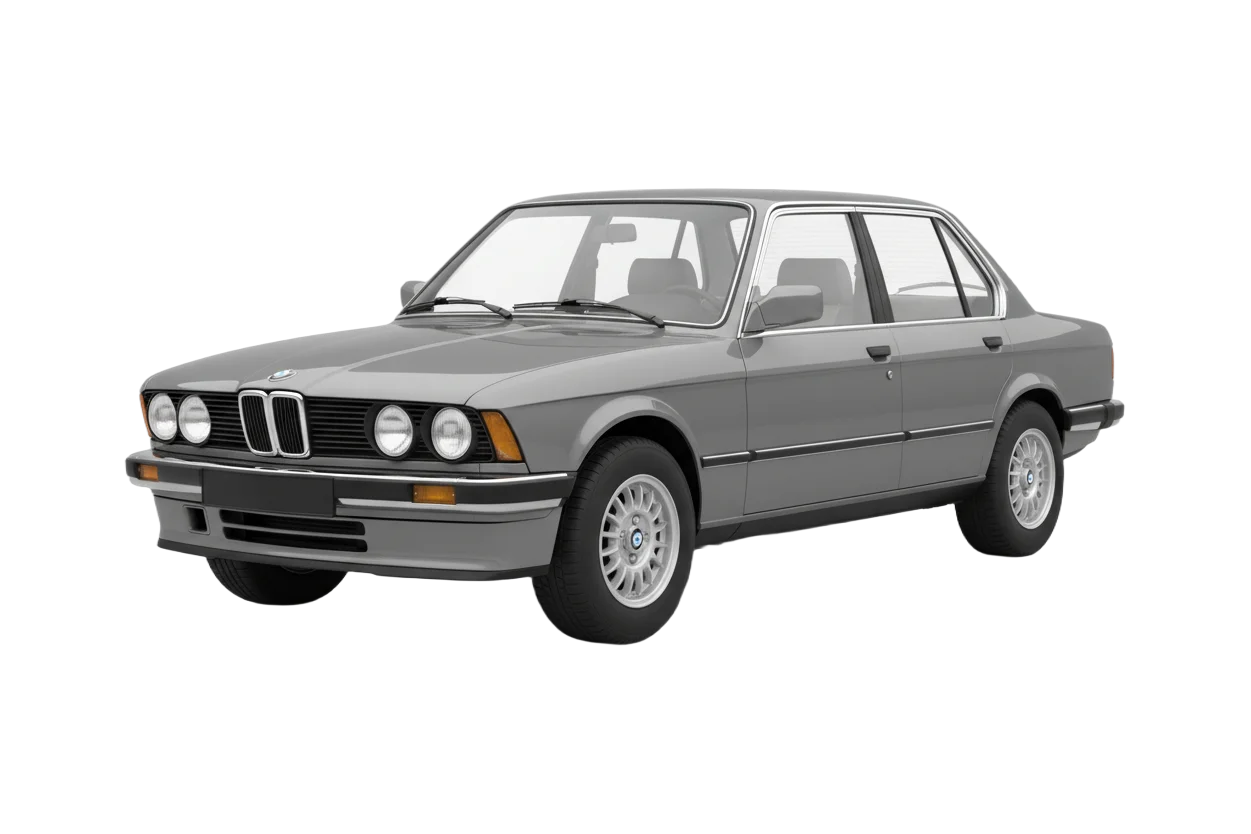
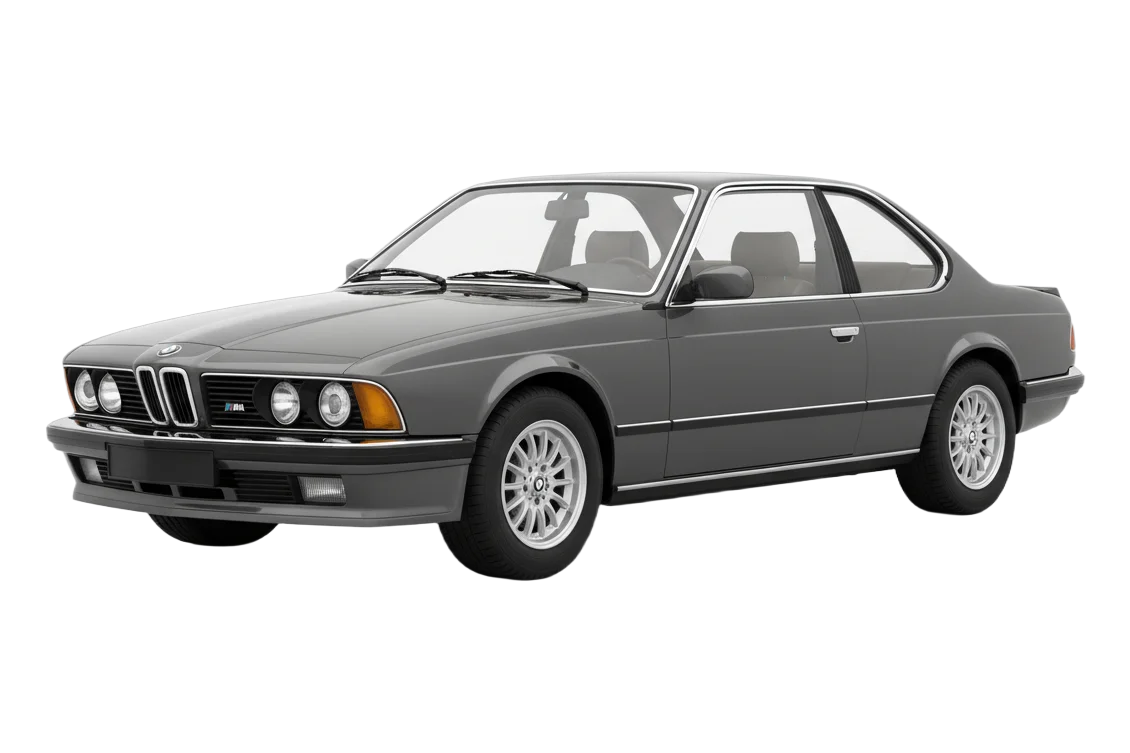
The BMW E24 6 Series was the grand touring successor to the iconic E9 coupe, offering an elegant combination of luxury and performance across a remarkably long 14-year production run. The M635CSi variant represented the ultimate expression of BMW's grand touring philosophy in the 1980s.
History
The BMW E24 6 Series, introduced in 1975, had the daunting task of replacing the beloved E9 coupe, widely regarded as one of the most beautiful BMWs ever made. Designed by Paul Bracq, the E24 adopted a more angular, modern aesthetic that reflected the design trends of the mid-1970s while maintaining the grand touring character that had defined its predecessor. The new car was larger, more comfortable, and more technologically sophisticated than the E9.
The E24 was produced in an extraordinary range of variants over its 14-year lifespan, from the entry-level 628CSi to the range-topping M635CSi (sold as the M6 in North America). The M635CSi, introduced in 1984, was powered by the legendary M88/3 3.5-liter inline-six engine shared with the M5, producing 286 horsepower. This engine, derived from the M1 supercar's powerplant, gave the grand tourer genuine supercar performance while maintaining the refinement expected of a luxury coupe.
Throughout its production run, the E24 received continuous updates that kept it competitive despite its aging platform. The introduction of electronic fuel injection, ABS brakes, and progressively more powerful engines ensured that later models were substantially faster and more refined than early examples. The car also proved successful in motorsport, with E24-based racers competing in the European Touring Car Championship.
With just over 86,000 units produced across 14 years, the E24 was never a high-volume model, which contributes to its desirability today. The car has aged gracefully, with its clean lines and shark-nose profile looking timeless compared to many of its contemporaries. The M635CSi in particular has become one of the most sought-after classic BMWs, combining rare M power with the elegance of a full-size grand tourer. The E24 6 Series remains a high-water mark for BMW's ability to create cars that blend luxury, performance, and visual sophistication.
Timeline
Production & Heritage
Value estimates are editorial assessments based on recent auction results and market trends.
Technical Specifications
Engine Details
Performance
Dimensions
Chassis & Suspension
Drivetrain
Capacity
Source: BMW AG / Wikipedia
Tags
Designed by Paul Bracq
From the 1970s
Featured in Collections
References & Sources


More in GT
See all
300 SL Gullwing
Giulietta Sprint
P1800