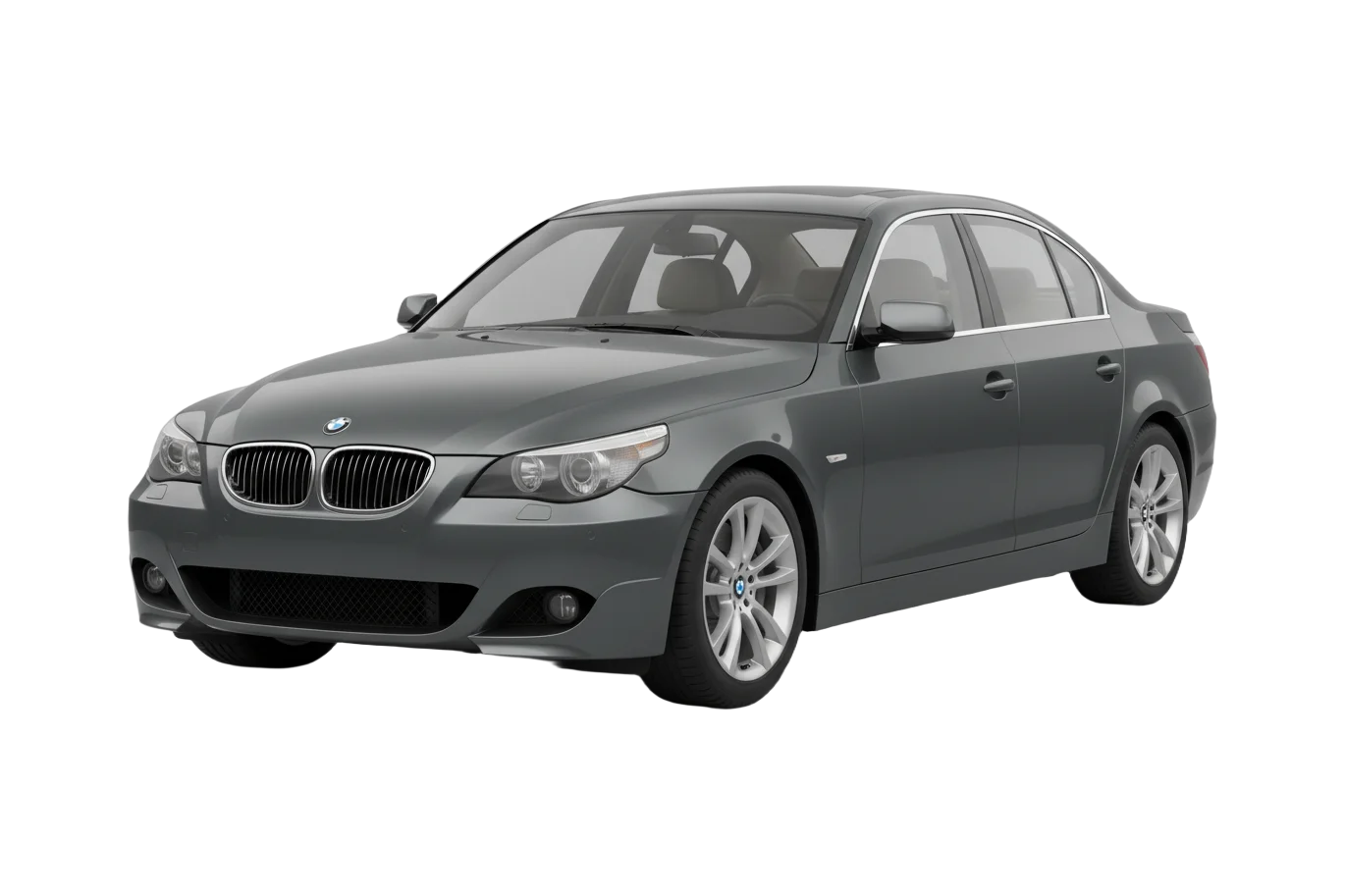
The BMW E60 5 Series was one of the most controversial designs in BMW history, featuring Chris Bangle's radical flame surfacing language. Despite polarizing aesthetics, it was technically advanced with innovations like iDrive, active steering, and adaptive damping that pushed the segment forward.
History
The BMW E60 5 Series, introduced in 2003, was the car that brought BMW's controversial 'flame surfacing' design language by Chris Bangle to the core of the brand's lineup. While the E65 7 Series had debuted the new aesthetic direction, the E60 brought it to BMW's highest-volume executive sedan, generating intense debate among enthusiasts and the press about the future direction of automotive design.
Beneath the contentious bodywork lay one of the most technologically advanced sedans of its era. The E60 introduced a host of innovations including Active Steering (which varied the steering ratio based on speed), Adaptive Drive (an active suspension system), Head-Up Display, and Night Vision. The iDrive infotainment system, first seen in the E65, was refined and improved, though it remained a source of controversy due to its complexity. These technologies positioned the E60 as a showcase for BMW's engineering capabilities.
The engine lineup was comprehensive, ranging from efficient four-cylinder diesels to the naturally aspirated 4.8-liter V8 in the 550i, which produced 367 horsepower. The crown jewel of the range was the M5 variant, which featured a Formula One-inspired 5.0-liter V10 engine producing 507 horsepower — one of the most remarkable powerplants ever fitted to a production sedan. The E60 also marked the introduction of turbocharged engines to the 5 Series range with the 535d diesel.
With nearly 1.44 million units sold, the E60 proved that Bangle's design direction, while controversial, did not harm the 5 Series commercially. Over time, the design has aged better than many predicted, and today the E60 is increasingly appreciated for its bold aesthetic choices and technological ambition. The M5 variant in particular has become highly collectible, with its screaming V10 representing the zenith of naturally aspirated engine development in a BMW sedan — a formula that would give way to turbocharging in subsequent generations.
Timeline
Production & Heritage
Value estimates are editorial assessments based on recent auction results and market trends.
Technical Specifications
Engine Details
Performance
Dimensions
Chassis & Suspension
Drivetrain
Capacity
Source: BMW AG / Wikipedia
Tags
Designed by Chris Bangle / Davide Arcangeli
From the 2000s
References & Sources


More in Sedan
See all
Traction Avant
DS 21 Pallas