
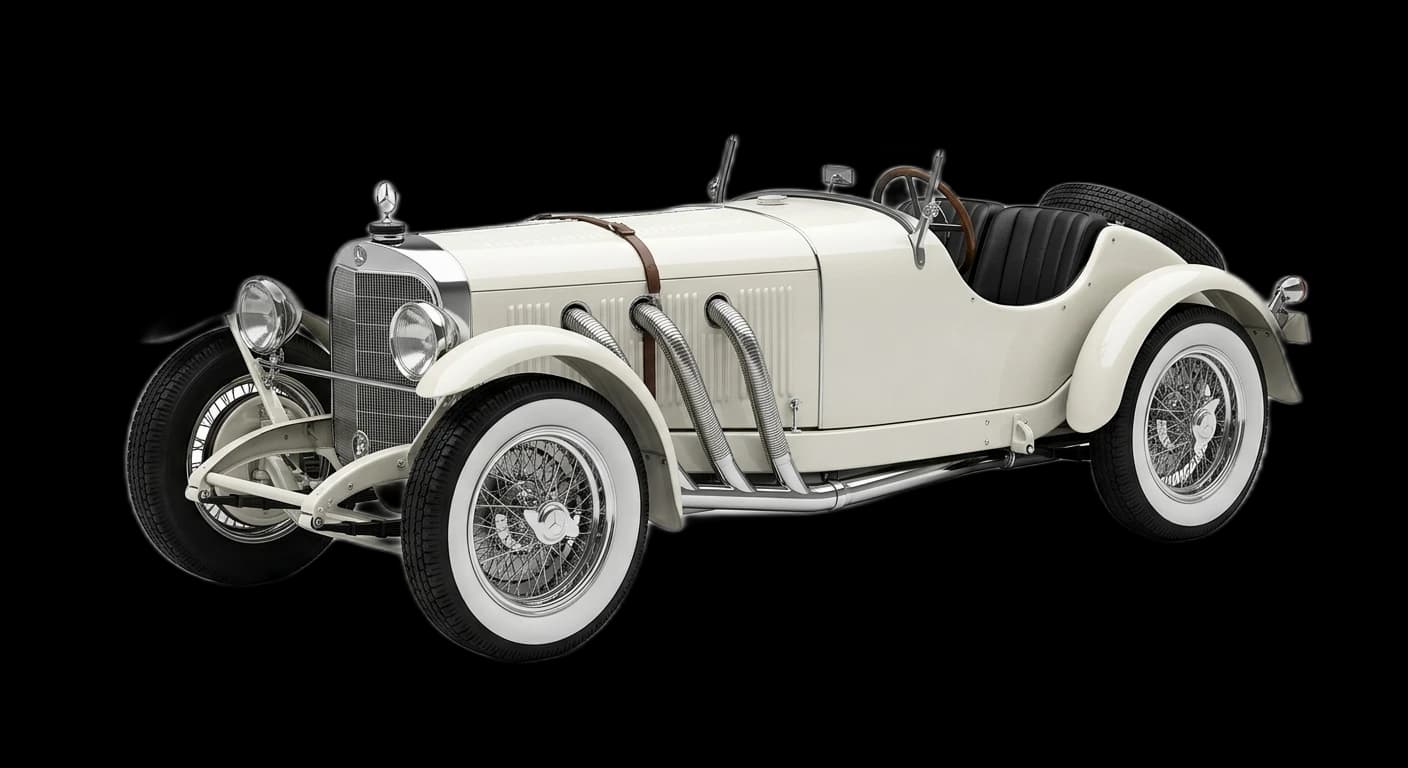
The Ferrari 250 GT Berlinetta Tour de France is one of the most successful and beautiful competition Ferraris of the 1950s, earning its unofficial name through multiple victories in the grueling Tour de France Automobile. It bridged the gap between Ferrari's pure racing cars and their grand tourers, establishing the template for the 250 GT SWB and GTO that followed.
History
The Ferrari 250 GT Berlinetta 'Tour de France' was not a single model but rather a series of lightweight, competition-oriented berlinettas built on the Ferrari 250 GT long-wheelbase chassis between 1956 and 1959. The name was never officially used by Ferrari but was adopted by enthusiasts to honor the car's remarkable record in the Tour de France Automobile, a demanding multi-day event combining circuit racing, hill climbs, and public road stages across France. The body was designed and built by Carrozzeria Scaglietti, working from designs attributed to Pinin Farina, with each car being subtly different as was typical of coachbuilt Ferraris of the period.
The 250 GT TdF was powered by Ferrari's legendary Colombo V12 engine displacing 2,953cc, producing between 240 and 260 hp depending on specification and state of tune. The engine breathed through three Weber carburetors and drove through a four-speed manual gearbox. The car's lightweight construction, with aluminum body panels over a tubular steel frame, kept weight to approximately 1,050 kg, giving it a power-to-weight ratio that made it competitive against both dedicated racing cars and other GT machinery. The chassis featured independent front suspension by double wishbones with a live rear axle, and the braking system progressed from drums to disc brakes during the production run.
The 250 GT TdF dominated the Tour de France Automobile, winning the event in 1956, 1957, 1958, and 1959. Notable drivers included Alfonso de Portago, Olivier Gendebien, and Lucien Bianchi. The car was also successful at Le Mans, the Mille Miglia, and numerous other international events, proving its versatility across different types of competition. Its combination of speed, reliability, and relative comfort meant that it could be driven to an event, raced competitively, and driven home, a quality that defined the best GT cars of the era.
Approximately 77 examples of the 250 GT TdF were built across several series, each identifiable by subtle differences in body style, louvre patterns, and technical specification. The rarity and competition heritage of these cars place them among the most valuable Ferraris in existence, with exceptional examples selling for well over 5 million euros at auction. The 250 GT TdF is universally recognized as one of the key stepping stones in Ferrari's GT car development, leading directly to the 250 GT SWB Berlinetta and ultimately to the 250 GTO, often cited as the most valuable car in the world. For Ferrari collectors and historians, the TdF represents the moment when Ferrari's road cars began to rival their racing machines for desirability.
Timeline
Production & Heritage
Value estimates are editorial assessments based on recent auction results and market trends.
Technical Specifications
Engine Details
Performance
Tags
Designed by Pinin Farina
From the 1950s
Featured in Collections
More in GT
See all







P1800
